AI video prompts: how much to write based on the starting image

Blackwood Collections
AI Film and Digital Art Studio
A prompt’s length depends on what its starting image already establishes. Here is how we divide the work between references and text to direct movement without describing the entire shot all over again.
Before counting words, look at the image
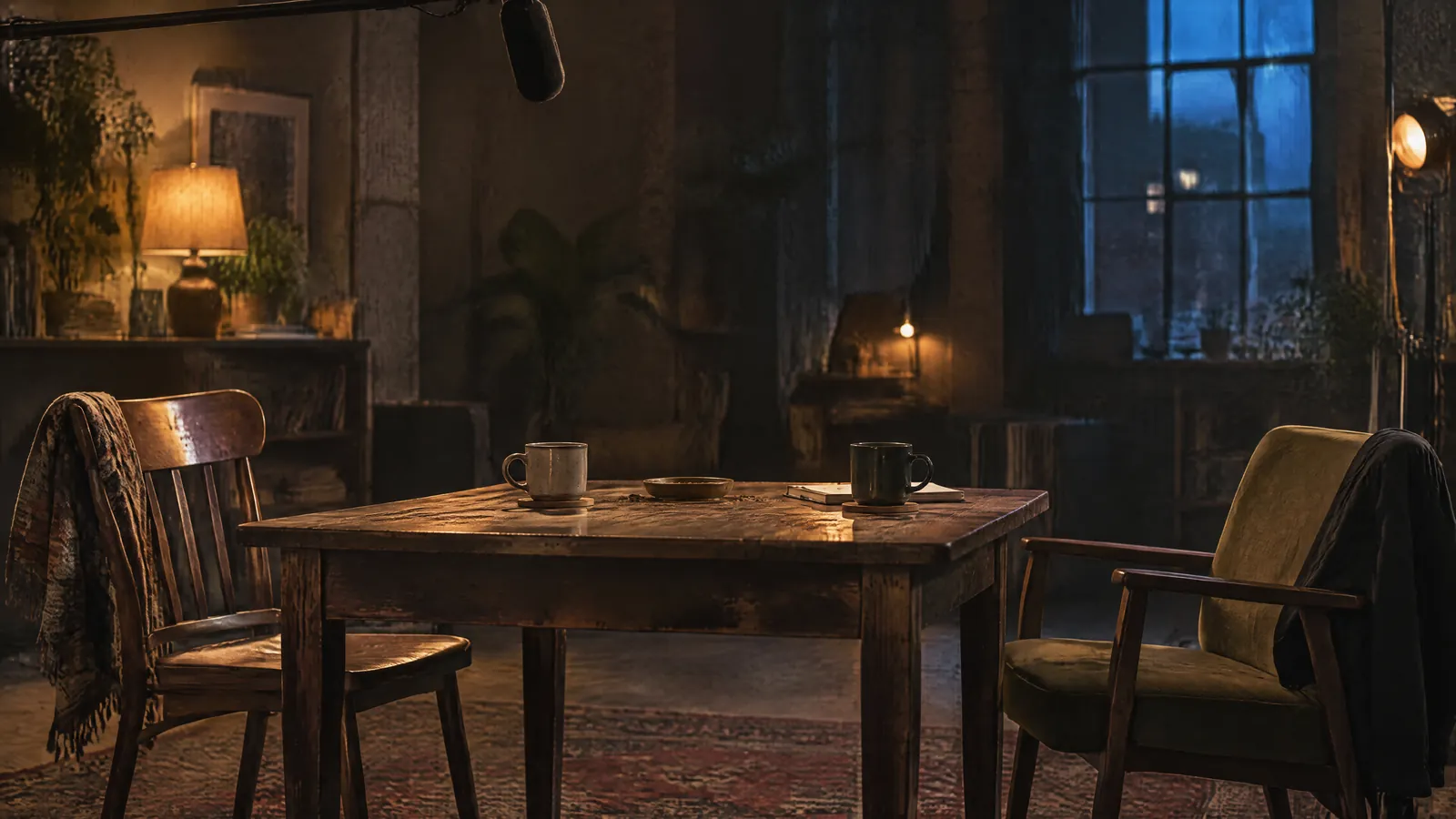
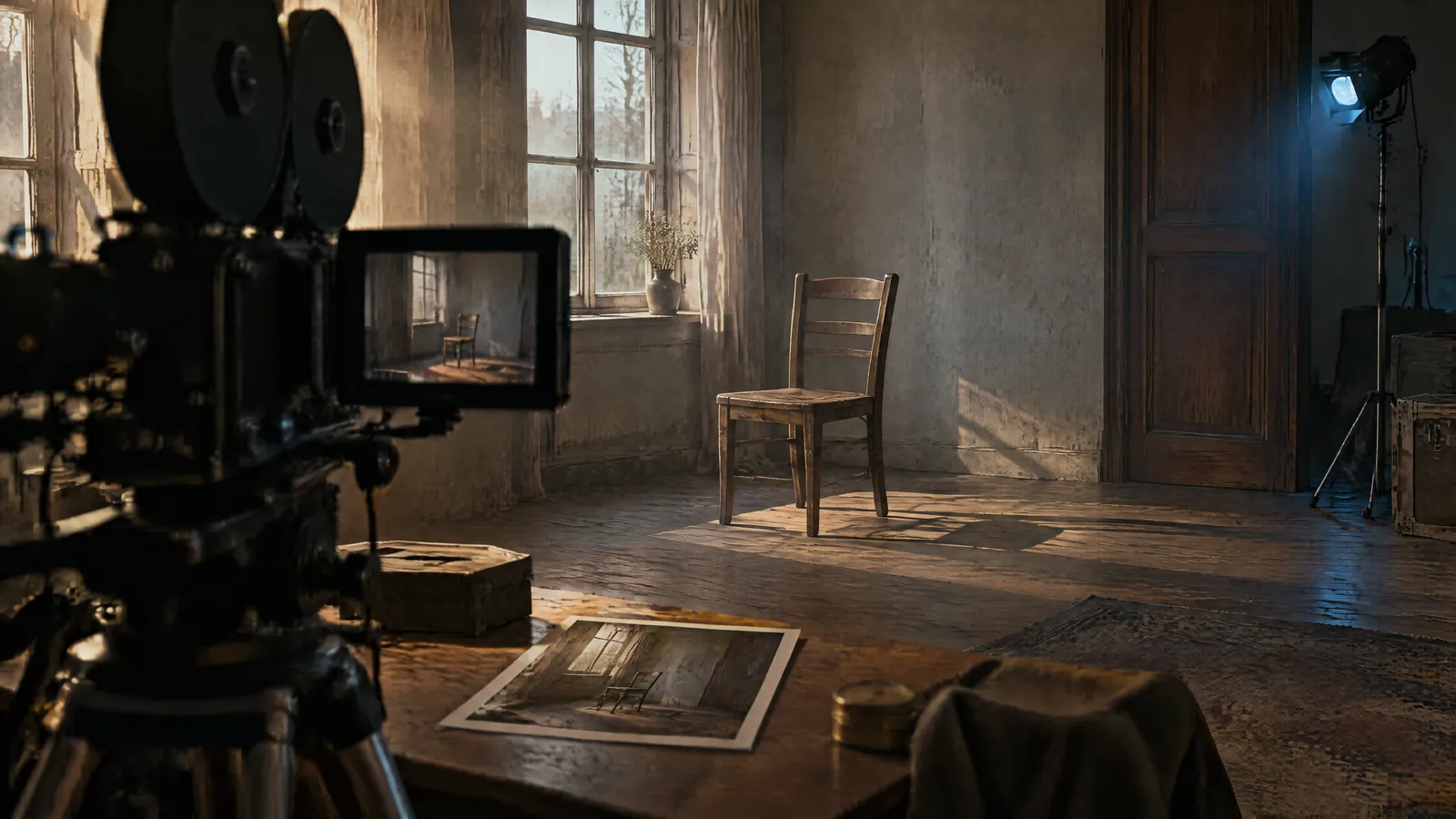
A prompt starts to find the right length when we know what information is missing. In our method, the decisive question is whether there is an anchor frame: a starting image that already establishes who appears, where they are, how the light falls on them and the camera’s viewpoint.
That image does some of the work the text would otherwise have to do. We therefore use different lengths to animate an established composition and to build a shot whose framing does not yet exist. The difference lies in the decisions still to be made.
With an anchor frame, write what changes
When the starting image is already right, the text directs the movement and its outcome. Our guideline in this case is 150 to 400 words, a working range that keeps the focus on the action and avoids rebuilding in words what is already visible.
Describe the camera’s movement and the subject’s action separately, then finish by stating the final state of the frame. If you start explaining the colour of a jacket that the reference clearly shows, check whether you are adding a necessary instruction or repeating information. Every reference needs a specific purpose.
Element references do not compose the shot
A character sheet can establish appearance without determining where the character will be in the scene. When we have character or object references but no anchor frame, the framing has to be built in writing, and our working range rises to 700 to 1,500 words.
This calls for positions, body orientation, distances between elements and a clear separation between foreground and background. State what each reference is for, too: a location image can define the space and its textures without dictating the camera angle. This keeps an appearance reference from deciding the composition.
When everything depends on text, change your strategy
If a scene is built from text alone or links several shots, our guideline is 1,500 to 2,500 words. These ranges belong to the studio’s writing method: they are neither a platform’s technical limits nor a guarantee of a successful result.
The extra length must settle decisions, not pile up adjectives. If the description needs to exceed the working limit, prepare an anchor image first or split the shot so that each part has a defined beginning and end. The aim is to reduce what the model has to guess.
Cut repetition, keep instructions
A useful revision checks what each section contributes. Keep the action, the camera path and the outcome; remove descriptions already established by the image and sentences that do not translate into anything visible or audible. Shortening makes sense when it clarifies the shooting instructions.
To practise translating intent into cinematic language, Cinema Lab is free in The Library, with 150 filmmaking techniques turned into prompts. Use it as your next step to define the decision your shot needs, then come back and check how much of the work belongs to the image and how much to the text.
Frequently asked questions
Does a longer prompt always produce a better video?
Length should reflect what still needs defining. If an image already establishes the cast, lighting and framing, repeating that information adds text without settling any new decision.
Is a character sheet the same as an anchor frame?
The sheet defines the character’s appearance; the anchor frame also establishes the shot’s initial composition. If you only have the sheet, you still need to determine where the character will be and how they relate to the space and the camera.